


Industrial grinding can generally be divided into purely manual operations and mechanical grinding. Depending on the application purpose and context, grinding products adopt various connection forms. However, different issues may arise during use. Below is an analysis of problems and solutions when using mechanical grinding.
Grinding with Machinery:
1. Excessive and tedious steps for weld cleaning and polishing
For workpieces with non-full welds or flat weld seams, separating weld cleaning and polishing is cumbersome, especially when the material removal requirement is minimal. Similar to the previous scenario, using flap discs with grinders, while efficient, often compromises the overall brushed finish and makes it difficult to achieve a smooth surface.
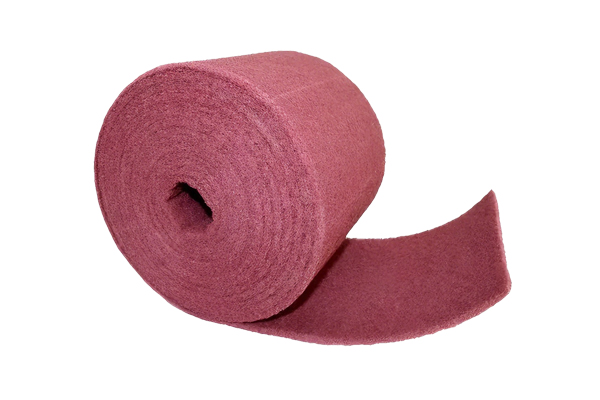
Solution: Using a vibration grinder with a dedicated scouring pad tray can gently remove dark oxide layers, rust, and coarse sanding marks from previous steps. This process is characterized by easier control over material removal compared to coated abrasive vibration grinding, making it more suitable for low-material-removal polishing and wet grinding. Cleaning and polishing can be completed in one step. Select scouring pads of different grits based on the roughness of the surface. Alternatively, grinders with built-in water spray or dust extraction can be used for broader applicability.
Solution Review: The “facial restoration” process of the grinding field.
2. High investment in belt sanders and space limitations
This is a common issue for many small and medium-sized enterprises. In terms of cost, belt sanders are significantly more expensive than grinders for equivalent cutting speeds, with higher power consumption and larger footprints.
Solution: Scouring pads can be converted into impeller-type products, similar to non-woven roller brushes often used for surface brushing and cleaning, and installed on stationary or portable small rotary grinders. This structure combines the efficient polishing characteristics of scouring pad brushes with the widespread applicability of rotary grinders. Typically, this can serve as the final polishing step. The rotational speed can be adjusted based on actual conditions, but it is generally not recommended to exceed 3000 rpm (for a 200mm outer diameter), as it may reduce the durability of the scouring pad brush. At 2500 rpm, the glossiness of polished hard aluminum alloy castings can exceed 60. This process is common in the grinding of aluminum, copper, or precision-cast components. Polishing compounds (wax) can also be added to further enhance glossiness.
Solution Review: A simplified version of large roller brush operations.
3. Quick grinding without additional tools
If the grinding requirement is minimal, scouring pads are scarce, or convenience is a priority, scouring pads can be used directly by wrapping them around the workpiece.
Solution: This application is most common in small-batch part production. Hand-sanding is too slow, but using high-speed machinery can significantly improve efficiency. Note that the machine speed should generally be a few hundred rpm, the scouring pad must be secured at both ends, and protective gear must be worn. This method is suitable for users who prioritize efficiency over high surface finish requirements and have large quantities of workpieces.
Solution Review: Flexible and convenient.
4. Low efficiency in processing irregular parts
Metal decorations, carvings, curved coverings, or protective parts are difficult to detail with conventional grinding wheels. Workpieces with undulating shapes, such as threaded rods, wave pipes, etc., are also challenging to clean and polish. Many customers are constrained by limited machining precision, unable to improve the surface quality of such components.
Solution: Scouring pads converted into disc shapes, due to their deformability, are particularly suitable for grinding irregular surfaces at moderate speeds. By selecting the appropriate grit and speed, various irregular parts can be efficiently processed. These discs can also be used for brushing, deburring metal or plastic parts, and surface pretreatment.
Solution Review: The best choice for users with small, diversely shaped workpieces.
5. Difficulty in cleaning inner walls and inaccessible inner corners
For barrel-shaped components, once the inner wall rusts or requires paint removal or deburring, grinding tools must reach inside. Examples include small-diameter pipes, elbows, and metal containers. In high-cleanliness applications, such as process fluid flow in containers affected by surface roughness, or sanitary-grade equipment pipelines with welded inner surfaces, impurities can accumulate during use.
Solution: Hand-held scouring pad operations are limited by depth, making it harder to apply force uniformly as the depth increases. By shaping scouring pads into brushes and attaching them to a metal rod, handheld rotary tools can easily meet these process requirements.
Solution Review: Inner hole cleaning is no longer difficult.
6. Linear texture processing on large flat surfaces that cannot be clamped on belt sanders
For exceptionally large workpieces, their size and weight often prevent the use of belt brushing. For undulating surfaces, the contact wheel of the belt sander must have elastic displacement to ensure conformity, which requires equipment modifications and increased capital investment.
Solution: Converting scouring pads for use with handheld brushing machines leverages their ability to create linear textures. This enables rapid processing of large flat or voluminous workpieces, especially suitable for undulating surfaces like curved decorative panels. It ensures surface conformity while maintaining continuous and clear textures. Different grits and speeds can achieve various polishing effects.
Solution Review: Convenient and fast linear texture processing and polishing for large workpieces.
7. Poor finishing and polishing results with handheld tools
Many customers have long used right-angle or straight grinders to finish and polish metal surfaces but struggle with local corrections or final polishing using traditional flap discs.
Solution: Scouring pad discs that fit grinder dimensions while delivering fine polishing are ideal. Internal thread or through-hole connections suit right-angle or straight grinders, such as Bosch’s right-angle electric grinders. Coarse-grit versions can even remove fine weld seams.
Solution Review: Converted into powerful metal processing discs.
8. Excessive cutting force of coated flap wheels
Coated abrasive flap wheels used for edge cleaning and local deburring often damage surfaces due to high grinding force from machine speeds.
Solution: Combining scouring pads with coated abrasives in flap wheels balances cutting force and surface quality.
Solution Review: The best of both worlds.
9. Wood sanding requires products with balanced grinding effects
Large-area wood sanding, often done with pneumatic sanders, demands longer lifespan and balanced grinding performance.
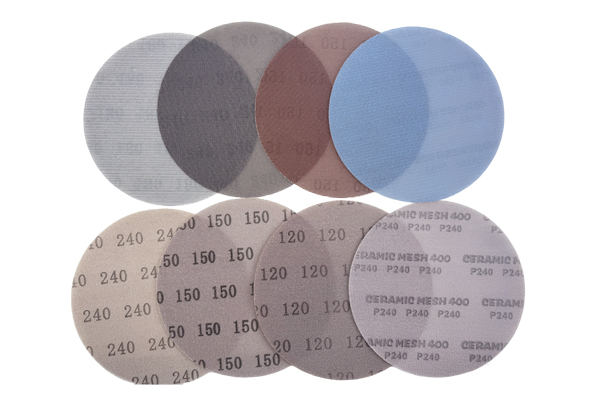
Solution: Coarse-grit disc sanders are suitable for initial sanding, while finer grits require dust extraction. For instance, 600-grit disc sanders without dust extraction clog quickly. Scouring pads are also efficient for wood sanding or blending. VFN/SFN grit scouring pads with flocking can be made into sanding discs for hook-and-loop backing pads, compatible with orbital or 5″+ sanders. Ideal for fine wood sanding and blending, they offer low cutting force and can pair with coated abrasive discs like 216U or serve as pretreatment for premium wood and painted surfaces.
Solution Review: Balanced performance for wood sanding.


 +86 18503711019
 Call
Call