


Industrial grinding can generally be divided into purely manual operations and mechanical polishing. Depending on the application purpose and context, grinding products adopt various connection forms. However, different issues may arise during use. Below is an analysis of problems and solutions encountered during manual grinding.
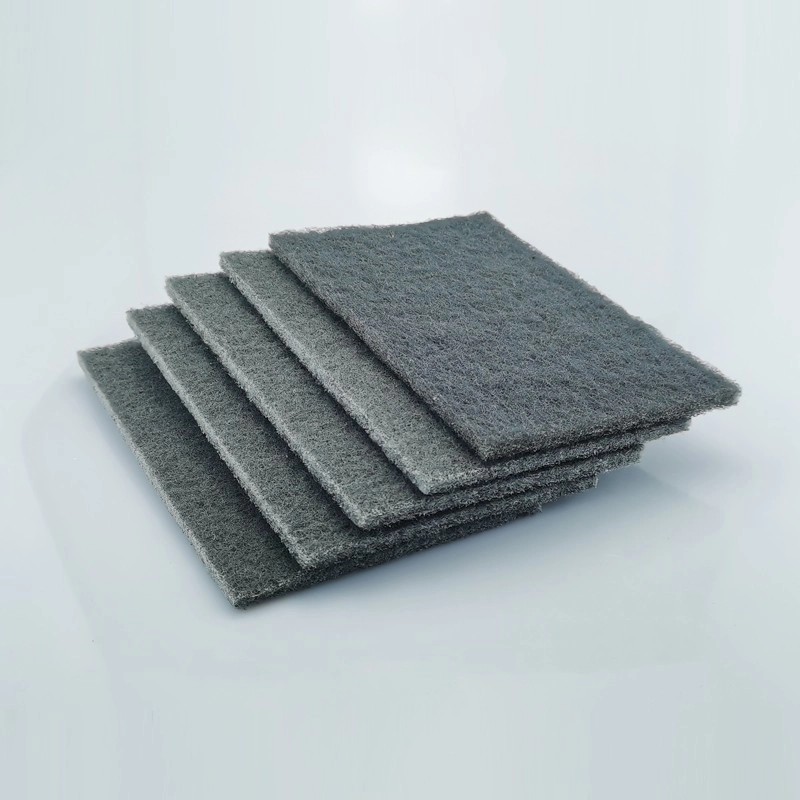
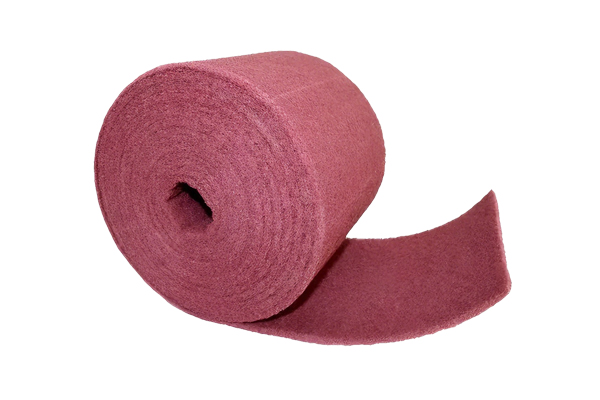
Manual Grinding:1. Uneven Paint Sanding (Texturing)Before applying the next coat of paint, it is necessary to increase the roughness of the original surface while cleaning poorly sprayed or aged paint layers. The goal is to enhance adhesion and improve surface uniformity. Texturing is often an essential auxiliary process in painting.When using coated abrasive paper of a fixed grit, uneven grinding may occur due to varying pressure, resulting in excessive material removal in some areas. Differences in paint and wood hardness, coating process quality, and the texture of subsequent paint layers can lead to inconsistent color and shading on the final product.Solution: The elastic structure of scouring pads distributes pressure evenly across the grinding area, effectively resolving this issue. Typically, FIN or MED grits are used. Other similar applications, such as substrate sanding, are also among the most representative uses of scouring pads.Review: Operators can cut or tear scouring pads into any shape based on their habits or workpiece contours. This is particularly suitable for uneven surfaces, whether on door panels or decorative strips.2. Incomplete CleaningThis primarily targets natural oxidation layers on metals, oil stains, corrosion, markings, and other residues commonly encountered in MRO (Maintenance, Repair, and Operations). A typical example is using steel wool to remove paint or marker labels, which often scratches hands and workpieces. Ordinary sandpaper, on the other hand, tends to wear out quickly—oxides easily clog the abrasive surface.For instance, after oxidation forms on aluminum or copper alloys, metal brightness decreases by about 30–50%. Using medium-grit scouring pads (e.g., 7447C) can quickly restore the metal’s original luster. FIN-grit scouring pads achieve cleaning goals while preventing clogging and avoiding injuries. Their key feature is rapidly restoring metal shine without damaging the surface.Review: Fast oxidation removal without harming the workpiece.3. Pipe End Grinding: Insufficient Smoothness, Unclear or Inconsistent Grain LinesFor furniture supports, structural parts, or decorative pieces, pipe ends often show spot welding, cutting, rough grinding marks, or even scratches. Ordinary grinding products cannot match the smoothness and grain lines of the main body. The usual remedy is polishing the pipe end separately, which is time-consuming.Solution: Medium-grit scouring pads distribute grinding pressure more evenly on the pipe surface. Greater pressure results in clearer grain lines, but excessive force should be avoided to prevent deep scratches. For high-precision workpieces, VFN or SFN-grit scouring pads can be used for final polishing.Review: Compared to one-handed operation, pressure is more uniform, ensuring better surface quality.4. Poor Efficiency and Effectiveness in Adhesive Residue RemovalAdhesive residue removal has always been a troublesome issue, yet adhesives are widely used in intermediate processes. For example:Aluminum-plastic panels (PVC-coated steel) in construction have protective films that sometimes leave stubborn residues after peeling.In PCB encapsulation, residual adhesive on wire frames must be cleaned.Ordinary sandpaper clogs easily due to its tight abrasive spacing. Repeated grinding may damage clean areas. Scouring pads, with their open fiber structure, resist clogging and prevent excessive grinding.Review: Compared to specialized adhesive removers, scouring pads offer better cost performance and reduce environmental pollution.5. Incomplete Burr Removal or Workpiece DamageAfter casting or machining, small burrs (typically 2–3mm tall) often remain on edges or grooves. Traditional methods (files or scrapers) risk scratching the workpiece.Solution: FIN or VFN-grit scouring pads remove burrs without unnecessary damage or creating secondary burrs.Review: The flexible non-woven structure allows quick and safe burr removal.6. Uneven Grain Treatment, Difficulty with Irregular PartsGrain treatment (brushing) is common in plumbing and cabinet industries, especially for modern faucets and sinks. Coated abrasive belts struggle with curved or irregular surfaces.Solution: Scouring pads with hand supports improve consistency in grain direction and thickness. The type of abrasive and fiber thickness determine grain characteristics. Custom supports can further reduce labor intensity.Review: Proper hand supports enhance quality and save time.7. Difficulty Cleaning Fine or Hard-to-Reach AreasCommon in woodworking and metal decor, such as carved furniture or narrow grooves. Before scouring pads, users resorted to sandpaper-wrapped sticks, which wore out quickly.Solution: Fine-grit pads (e.g., 7521C, 7522C) access tight spaces, while coarse-grit pads clean rough grooves without deep scratches.Review: Combines multiple steps with controlled grinding force.8. Unstable Manual Finishing QualityManual finishing varies due to operator skill and inconsistent abrasive products.Solution: Scouring pads improve reliability:Coarse grits (7440) for rough casting (e.g., electrical junction boxes).Fine grits (75221C, 7445) for precise finishing (e.g., car door panels, furniture dividers).Review: Select grits based on process requirements.9. Lack of Suitable Manual Polishing ProductsSandpaper clogs easily, harming delicate surfaces (e.g., thin paint, soft metals).Solution: Scouring pads excel in polishing aluminum, copper, and dust-prone materials (e.g., pipe fittings), improving gloss by 20–30% with minimal swirl marks.Review: Quickly enhances smoothness.10. Rust Removal: Clogging and Dust ScatterTraditional brushes and steel wool are inefficient; sandpaper is overly aggressive.Solution: Medium-grit scouring pads (e.g., 7447C) offer gentler cutting, reducing workload. Their hollow structure traps rust dust, extending lifespan. Shake off excess dust during large-scale work.Review: Efficient and safe.This structured approach ensures higher productivity, better surface quality, and reduced labor intensity across various industrial applications.


 +86 18503711019
 Call
Call