



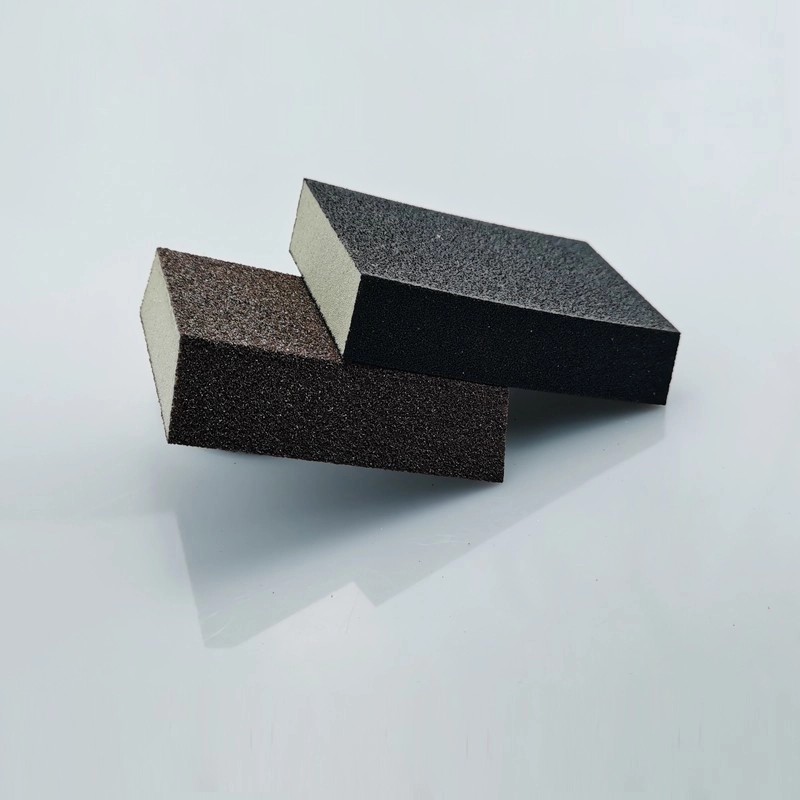
What is the difference between a sanding sponge and ordinary sandpaper?Sanding SpongesSanding sponges, also referred to as sanding sponge blocks, are a type of abrasive product. Unlike conventional sandpaper, sanding sponges are not manufactorered with paper or fabric as the abrasive base. Instead, the abrasive grit is embedded within a sponge or TPU (Thermoplastic Polyurethane) substance. The different base material is the key difference between sanding sponges and traditional sandpaper.
Key DifferencesSurface Application: Conventional sandpaper is primarily used for sanding rough, flat surfaces, whereas sanding sponges are more effective for polishing curved surfaces.Form Factor: Regular sandpaper usually comes in sheet form, while sanding sponges can be produced in a variety of shapes and sizes.Versatility: Sanding sponge blocks are adaptable and can be utilized for both dry and wet sanding, as they can absorb water and possess excellent water resistance.With the innovation and utilization of sanding sponges, their usage has become increasingly prevalent across a range of different industries.Can Sanding Sponges Replace Regular Sandpaper?Sanding sponges and traditional paper-based sandpaper both feature a layer of abrasive material embedded within them. However, sanding sponges enhance this design by utilizing a sponge or TPU as the backing material. In comparison to regular sandpaper, sanding sponges are generally more resilient, softer, and possess superior water absorption capabilities.Thanks to their sponge-like composition, sanding sponges provide good pressure distribution and consistent force during the sanding process. While the sanding efficiency of sanding sponges is on par with that of conventional sandpaper, they offer a more enjoyable user experience overall. Moreover, for the same grit size, sanding sponges deliver more uniform sanding results compared to traditional sandpaper.The biggest advantage of a sanding sponge lies in its superior surface treatment results compared to regular sandpaper when using the same abrasive material and grit size. Even at coarser grit sizes, sanding sponges exhibit higher cutting efficiency and durability than traditional sandpaper. Therefore, overall, sanding sponges are considered superior to regular sandpaper and can be used as a replacement. It finds application in areas that require high-quality sandings, such as manual sanding of furniture, surface polishing of plastic products, automotive repair and paint touch-ups, and surface treatment of metal rust and plastics.A sanding sponge offers several advantages over regular sandpaper. Its unique composition and properties make it a versatile and effective abrasive tool. With its enhanced durability, flexibility, and water absorption capabilities, it has gained popularity in various industries. sanding sponge can indeed replace regular sandpaper for applications that demand high-quality sanding. Its usage extends to fields such as manual furniture sanding, plastic surface polishing, automotive repair and paint touch-ups, and surface treatment of metal rust and plastics.



 +86 18503711019
 Call
Call