


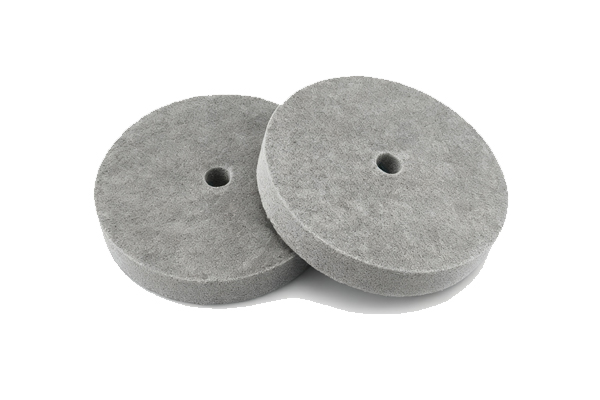
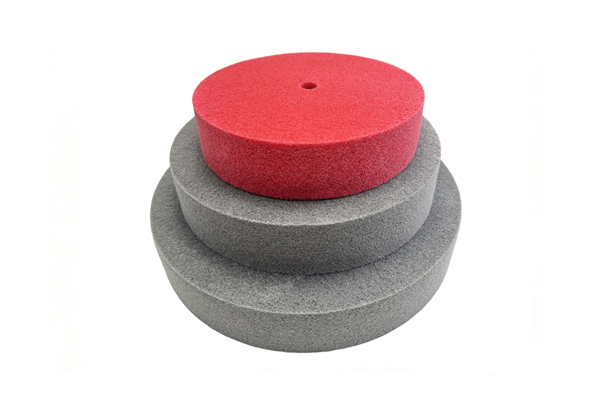
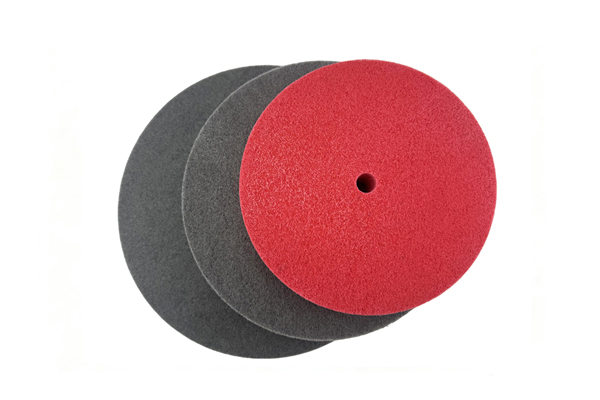
Suitable for metal and stainless steel products.
Used widely in aerospace, plant maintenance, foundry, automotive, metal fabrication and shipyards.
Wheel is made of fiber.
Specifications
| Material | Size (mm) | Size (inch) | Hardness | Hole Diameter | Thickness |
|---|---|---|---|---|---|
| Fiber & Plastic | 100 mm | 4″ | 5P, 7P, 9P | 16 mm | 1/2″ (12.5 mm) |
| Fiber & Plastic | 115 mm | 4.5″ | 5P, 7P, 9P | 16 mm | 1/2″ (12.5 mm) |
| Fiber & Plastic | 125 mm | 5″ | 5P, 7P, 9P | 16 mm | 1/2″ (12.5 mm) |
Hardness 5P / 7P / 9P refers to the density grade — a higher number gives a denser wheel and a firmer contact, which suits heavier pressure and longer service life. The 4″–5″ wheels are supplied in a standard 1/2″ (12.5 mm) thickness.
Product features:
Made of high-tenacity nylon fiber, quality abrasives, and bonded with a special adhesive. The open mesh structure can resist high temperatures, reducing the risk of discoloration and deformation of components when in contact with the wheel, while also making the wheel more wear-resistant.
Product use:
Suitable For Buffing, Polishing And Grinding Metal, Glass, Jewellery, Stainless Steel, Aluminium, Brass, Wood, Iron, Etc..
Product advantages:
It can improve the surface condition of the workpiece without significantly changing the shape and size of the workpiece. During the grinding process, fresh abrasives continuously act on the workpiece. The machined surface provides a stable and uniform polishing effect.
One of the main advantages of Fiber polishing buffing wheels is their versatility. They can be used on a wide range of metals, including stainless steel, aluminum, brass, and copper. They are also suitable for use on non-metallic materials such as plastics and composites. This makes them an ideal tool for use in a variety of industries, including automotive, aerospace, and jewelry making.
Another advantage of Fiber polishing buffing wheels is their durability. They are designed to withstand the high speeds and pressures required for metal polishing and can last for a long time with proper care and maintenance. They are also easy to use, with most models attaching to a standard bench grinder or polishing machine.
Larger Diameters (6″ – 12″)
| Material | Thickness | Hardness | Diameter | Hole Diameter | Max R.P.M. |
|---|---|---|---|---|---|
| Fiber | 1″-2″ (25-50 mm) | 5P, 7P, 9P | 6″ (150 mm) | 16 mm | 2800 |
| Fiber | 1″-2″ (25-50 mm) | 5P, 7P, 9P | 8″ (200 mm) | 16 mm | 2800 |
| Fiber | 1″-2″ (25-50 mm) | 5P, 7P, 9P | 10″ (250 mm) | 16 mm | 2800 |
| Fiber | 1″-2″ (25-50 mm) | 5P, 7P, 9P | 12″ (300 mm) | 16 mm | 2800 |
For larger bench and pedestal grinders, these wheels are made from 6″ (150 mm) up to 12″ (300 mm) in
diameter, with thickness from 1″ (25 mm) to 2″ (50 mm). Maximum operating speed is 2800 R.P.M. —
do not exceed it.
However, there are some limitations to Fiber polishing buffing wheels. They are not suitable for use on extremely hard metals such as titanium or tungsten, as these materials require specialized polishing tools. They also require regular cleaning and maintenance to prevent the buildup of polishing compounds and debris, which can affect their performance.
Fiber polishing buffing wheels are a versatile and durable tool for metal polishing and buffing. They are widely used in various industries and can provide a high-quality finish to a wide range of materials. However, they do have some limitations and require proper care and maintenance to ensure optimal performance.


 +86 18503711019

 Call