


The short answer
Two disc shapes do two different jobs. T29 is tapered: the contact sits on a narrow band, so it cuts fast — bevel prep, weld bead, edges, corners. T27 is flat: the load is spread wider, so it blends without digging in — blending and finishing. Using one disc for both is the most common reason a dressed weld looks chewed.
Step down one grit at a time: P40 → P60 → P80 → P120. Our stocked flap disc range starts at P40; P36 is available to order, and a fiber disc at P16–P120 is the other route for heavy stock removal.
Acceptance comes from the drawing, not from feel. Under ISO 5817 level B the excess weld height is h ≤ 1 + 0.1b (max 5 mm) with a smooth transition at the toe. Undercut, cracks and lack of fusion are welded or cut out — they cannot be ground away.
And the boundary: power-tool cleaning reaches St 3 (ISO 8501-1) / SSPC-SP 11, min. 25 µm profile. Surface preparation grades above that require abrasive blasting, which we do not supply.
Workpieces, stages and the three failure modes
| Item | What it covers |
|---|---|
| Industries | Structural steel, pressure vessels, pipe spool fabrication, shipbuilding and offshore, petrochemical plant, on-site installation |
| Workpieces | Butt and fillet welds, multi-pass capping, weld toe, bevel and land, spatter, excess weld height, pipe girth seams |
| Materials | Carbon steel (Q235, Q345, A36), stainless (304, 316L), low-alloy steel, aluminium, duplex |
| Where it happens | Fabricator running batch work, spool shop doing bevel plus post-weld, site crew on field welds, repair bay on breakdown work |
Weld dressing is not one operation but three, in three places on the same joint: the bevel before the arc, the bead after it, the finish before coating. Each has its own acceptance criterion, its own abrasive, its own way of going wrong. Selecting by grit number — “we run P60 on welds” — collapses all three into one, which is why the same shop gets clean plate and rejected pipe.
The cost of this work is not in the abrasive but in the repair and inspection. One cut-out and re-weld after a failed NDT test costs more than a year of discs for the same welder — which is why bevel cleaning and interpass cleaning, the two steps that always look optional, are the two that pay.
Three failures worth recognising by sight:
- Tea-staining rust on stainless. Iron-bearing particles embed beside the weld and break the passive layer; it appears weeks later, after the part has shipped. The fix is upstream: controlled iron, sulphur and chlorine content in the abrasive, an air blow-down between steps, and stainless tooling kept away from carbon-steel tooling.
- Heat tint — straw, blue, purple. Too much pressure at too high a speed. Tint is oxidation, not dirt: grinding it off removes metal and still leaves the surface unpassivated. Light pressure, one grit at a time.
- Thinning the parent metal. Almost always a bonded grinding wheel used as a weld-dressing tool. Wall thickness is what the NDT and the hydrostatic test measure: a flap disc removes the bead, a grinding wheel removes the bead and part of the pipe with it.
One point that costs nothing to state: stainless grinding dust carries hexavalent chromium. Local extraction at the point of cut is the control. A respirator is the last line, not the first.
Which disc for which pass
The table is built by stage, not by grit number. The flap disc range covers both shapes, but shape is chosen by the pass and grit inside that shape.
| Stage | Job | Product | Type | Grit | Size |
|---|---|---|---|---|---|
| Before the arc | Mill scale, rust and oxide on plate, section and pipe — machine work | XZ330 zirconium corundum cloth / GXK51 aluminium oxide cloth | — | 24–40 | 1400 mm cloth, slit to your width |
| Before the arc | Bevel and land, by angle grinder | plastic backed flap disc | T29 | P40 | 100–180 mm |
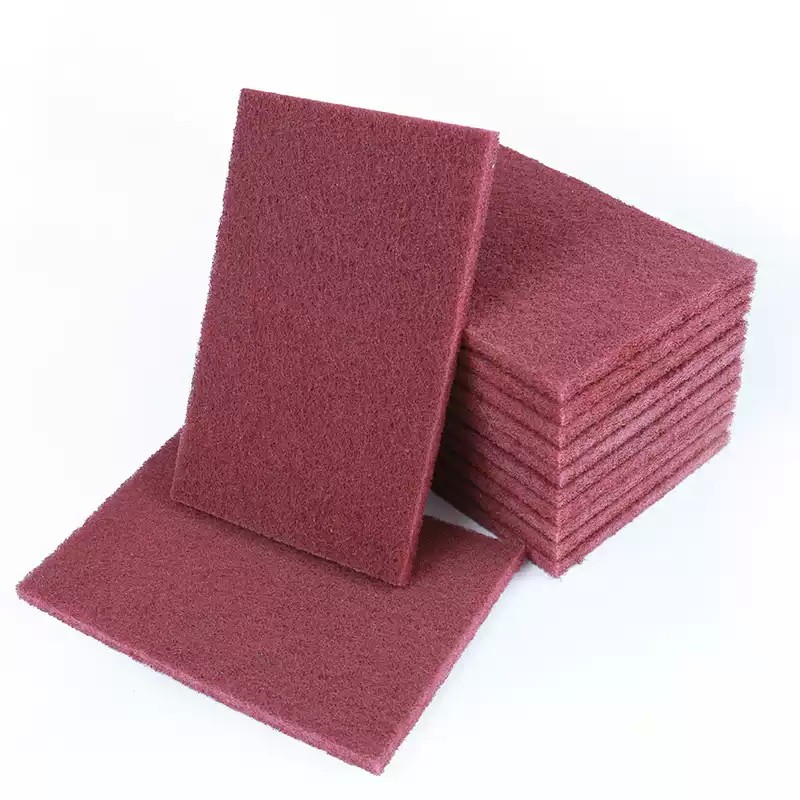
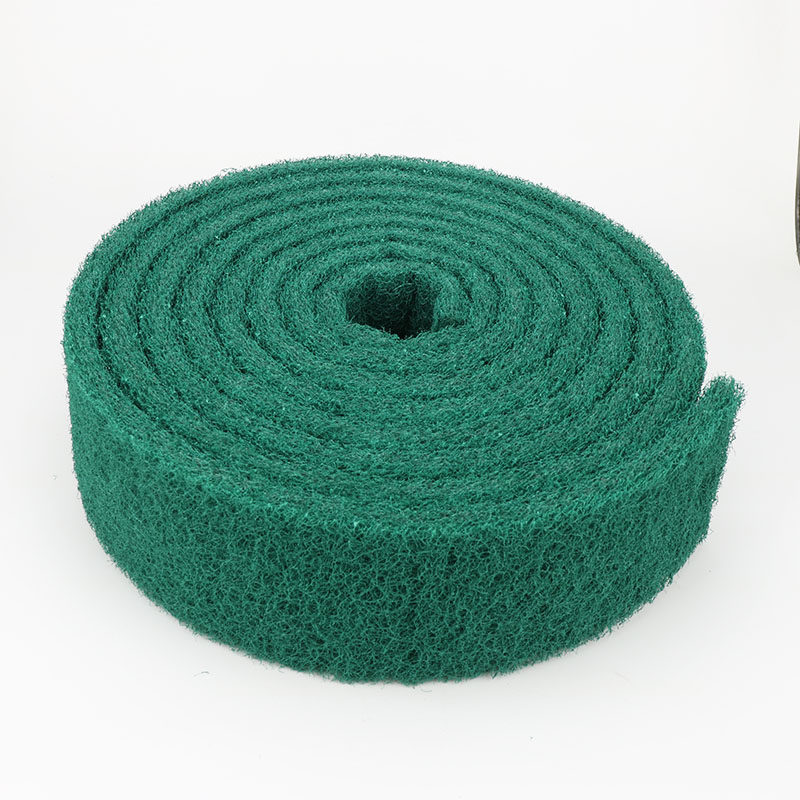
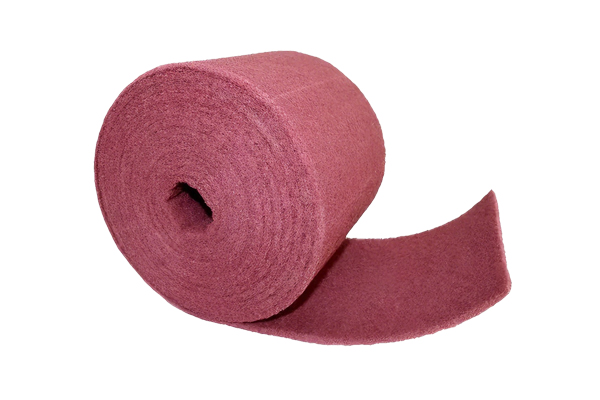
| Before the arc | Bevel face and interpass wipe, stainless | non-woven hand pads — green coarse / maroon very fine | — | Coarse / Very fine | 150 × 230, 150 × 100 mm |
| After the arc | Weld bead, spatter shell, excess height | plastic backed flap disc | T29 | P40 | 115 / 125 / 180 mm |
| After the arc | Height down to the acceptance line | plastic backed flap disc | T29 | P40–P60 | 115 / 125 mm |
| After the arc | Blending — killing the step and the ripple | flap wheel, fibreglass backing / modified flap disc / curved flap disc for corners | T27 | P60–P80 | 115 / 125 mm |
| After the arc | Finish before coating | flap wheel, fibreglass backing | T27 | P80–P120 | 115 / 125 mm |
| After the arc | One-direction texture on stainless | nylon fiber polishing wheel, 5P–9P | — | — | 100–300 mm |
| Local repair | Spatter and heat tint, without removing metal | clean and strip disc | T27 | — | 100 / 115 / 125 mm |
| Local repair | Root, inside corner, small cavity | Roloc quick change disc | R / S / P | Coarse–Fine | 25–75 mm |
| Before coating | Large structures — St 3 preparation | wide belt / segment belt plus a fiber disc | — | 24–220 / P16–P120 | 1400–1650 mm |
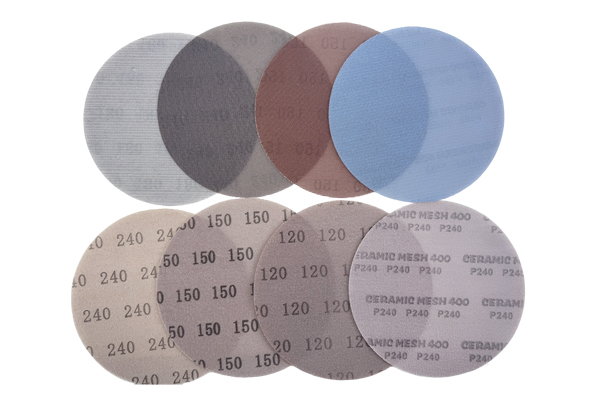
Grain and backing — what is made to order. Ceramic-grain flap discs, cloth (X-weight and J-weight), paper and mesh are available to order — state the grit and size on the enquiry. Our stocked flap disc range is aluminium oxide and heat-treated aluminium oxide, P40–P400. Zirconia is a heavy-duty grain that needs high pressure and high stock removal, so zirconia cloth is normally built on X-weight backing rather than J-weight.
P40 is where our stocked range starts, not where it ends. The T27 and T29 flap discs we stock run from P40 to P400, and P36 is available to order. For the heaviest stock removal — thick-plate build-up, cast repair, a bead that was laid too hot — a fiber disc at P16–P120 on a backing pad covers the same ground from the coarser end.
T29 against T27 is geometry, not grit. The same P60 behaves like two tools: on a T29 the contact band is narrow and the pressure per unit area high, so it cuts and leaves a groove; on a T27 it spreads over a wider arc and only polishes the tops off. That is why the table alternates shape at the blending step. Running T29 to blend, or T27 to take down a bead, is wrong in both directions.
Row nine is the stop-loss. Where no reduction in wall thickness is acceptable — thin-wall tube, pressure parts already at minimum, anything heading for a hydrostatic test — a non-woven clean and strip disc lifts spatter and tint while barely touching the geometry. Slower than a flap disc and not a height-removal tool: the only safe option in that column.
Process parameters
The numbers below are what an operator can actually control at the machine, plus the acceptance values being worked towards. The level itself comes off the drawing, which comes off the design code or the class rules.
| Parameter | Value | What it means in practice |
|---|---|---|
| Excess weld height — ISO 5817 level B | h ≤ 1 + 0.1b, max 5 mm | b is the weld width. A smooth transition at the toe is part of the requirement |
| Excess weld height — level C | h ≤ 1 + 0.15b, max 7 mm | More allowance. Typical of non-fatigue, non-pressure work |
| Excess weld height — level D | h ≤ 1 + 0.25b, max 10 mm | The widest allowance in the standard — still not a target |
| Grit step | P40 → P60 → P80 → P120 | One step at a time. A skipped step leaves the previous scratch visible after coating |
| Contact angle | T27 0–15°; T29 15–25° | Angle is what separates cutting from blending. Take a flat disc past 15° and it starts gouging |
| Power-tool cleaning ceiling | St 3 (ISO 8501-1) / SSPC-SP 11, min. 25 µm profile | The highest preparation grade a power tool reaches. Anything above it requires blasting |
| Maximum speed | Bonded disc 80 m/s; clean and strip 15,200 / 13,300 / 12,200 rpm at 100 / 115 / 125 mm; nylon wheel 2,800 rpm at 150–300 mm | Over-speed is the main cause of disc burst: check the tool rpm against the disc, not against habit |
| Between passes | Air blow-down; stainless tooling kept apart from carbon-steel tooling | Embedded carbon-steel particles are what rust through the surface weeks after dispatch |
| What no abrasive removes | Undercut, cracks, lack of fusion | Weld repair or cut out. No acceptance level permits leaving them, and grinding only makes undercut deeper |
Which level applies is a drawing question, not a workshop question. If the drawing names ISO 5817 without a level, ask before quoting — level B allows noticeably less height than level D, and that decides how many passes the job takes.
Angle and speed are what the operator actually controls. A T29 held at 20° cuts a groove in seconds and cannot put the metal back; a T27 held flat blends the same weld without touching the parent metal beside it. Over-speed with a worn disc burns a surface faster than pressure does.
What each route can and cannot do
Four tool families do this work. None is right on its own, and the choice is usually decided by what the part has to pass, not by how fast the metal comes off.
| Route | Where it is strong | Where it stops |
|---|---|---|
| Bonded grinding disc | Fastest heavy stock removal on thick plate, and the tool every welder already has on the grinder | Cuts into the parent metal as readily as the bead. Wall thinning is what fails NDT and the hydrostatic test — on thin wall, tube and pipe it is the wrong tool |
| Flap disc, T29 then T27 | One family covers removal and blending, and both shapes come in the same grit range. Hard to gouge compared with a bonded disc | Stocked range starts at P40 and stocked grain is aluminium oxide and heat-treated aluminium oxide. Removal and blending need two shapes, so it is never one disc from start to finish |
| Fiber disc, P16–P120 | Goes coarser than the stocked flap range, and holds a hard edge on flat plate | Needs a backing pad and a steady hand; used carelessly it thins wall like a bonded disc |
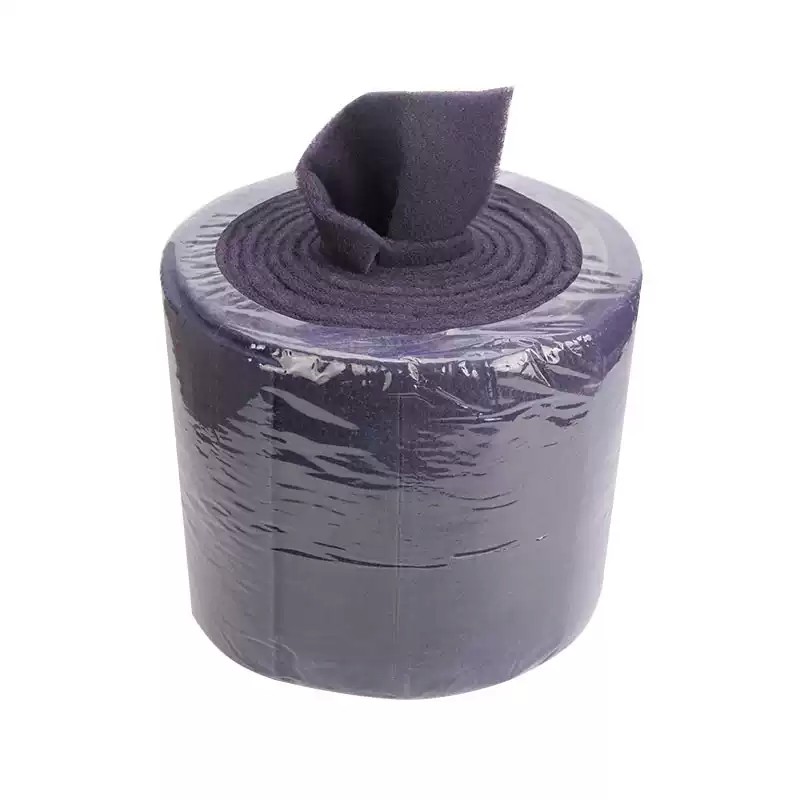
| Non-woven — clean and strip and hand pads | Barely changes geometry by design. The only safe route for spatter, heat tint and interpass cleaning on stainless | Not a height-removal tool. Loads up and then smears the contamination instead of lifting it |
The usual production answer is a sequence, not a choice: bonded disc only where the bead is genuinely heavy, T29 to bring it down, T27 to blend, non-woven where the surface must not move. One tool for all four jobs is where gouged plate and polished-away bevels come from.
On grain and documentation, plainly. Our stocked flap disc range is aluminium oxide and heat-treated aluminium oxide, P40–P400. Ceramic-grain flap discs, cloth in X-weight and J-weight, paper and mesh are available to order — state the grit and size on the enquiry. What we cannot do is issue a standard conformity document pack (EN 12413 / EN 13743) or an AS safety file. Name the document and the project on the enquiry and we will confirm what we can provide — but where it is a hard requirement, we are probably not the best supplier, and it is better to say so at the start.
Frequently asked questions
T27 or T29 — which one do I need for welds?
Both, for different passes. T29 is tapered, so the contact sits on a narrow band with high pressure per unit area: bevel prep, bead removal, edges and corners. T27 is flat, so the load spreads wider and it blends without digging in. Keeping only one shape means using it for the job it was not designed for.
What grit flap disc should I use on a weld?
Start at P40 on the bead, step to P60 for blending, finish at P80–P120 before coating. Our stocked flap discs run P40 to P400, and P36 is available to order if the bead is heavier than usual. A fiber disc at P16–P120 is the other option when the job starts coarser still.
Can I grind a weld with a bonded grinding wheel?
You can, and on thick plate it moves metal faster than anything else. It is the wrong tool for dressing a weld: a bonded disc removes parent metal as readily as the bead, and wall thinning is the most common reason a weld fails NDT or the hydrostatic test. Keep it for build-up and cast repair.
How flat does a weld have to be?
As flat as the drawing says, and no flatter. ISO 5817 level B allows excess height of h ≤ 1 + 0.1b, max 5 mm, with a smooth transition at the toe; levels C and D allow more. If the drawing names the standard without a level, ask the designer.
Can grinding remove undercut?
No. Undercut is missing parent metal, and an abrasive cannot put metal back. Grinding it makes the section thinner and the flaw longer, which is why undercut is a weld repair, never a finishing operation. The same applies to cracks and lack of fusion.
Can I grind off heat tint?
You can remove the colour, but that is not the same as restoring corrosion resistance. Tint is a chromium-depleted oxide layer; abrading it away leaves a surface that looks clean and is still not passive. On stainless, mechanical removal is followed by pickling and passivation, or the weld corrodes at the tint line.
How do I stop tea-staining rust on stainless welds?
Control three things: the abrasive, the tooling, and what happens between passes. We can supply abrasives with controlled iron, sulphur and chlorine content for 316L and food-contact work — state the workpiece and the contact medium on the enquiry and we confirm the grade. Blow the part down between steps, and keep stainless tooling away from carbon-steel tooling.
Does power-tool cleaning replace abrasive blasting?
No. Power-tool cleaning reaches St 3 (ISO 8501-1) / SSPC-SP 11, with a minimum 25 µm profile — the ceiling, not an average. Any specification calling for a higher grade requires blasting, which we do not supply; if the coating data sheet names one, plan it as a separate operation.
For the wood shop side of the same series: wood sanding grit sequence: steps and where to stop covers bare timber up to the point where the abrasive starts working on the film instead.


 +86 18503711019

 Call