



In the world of power tools, the terms “disc grinder” and “angle grinder” are frequently used interchangeably, creating confusion for both beginners and experienced tradespeople. However, these tools do showcase distinct differences in design, functionality, and usage.
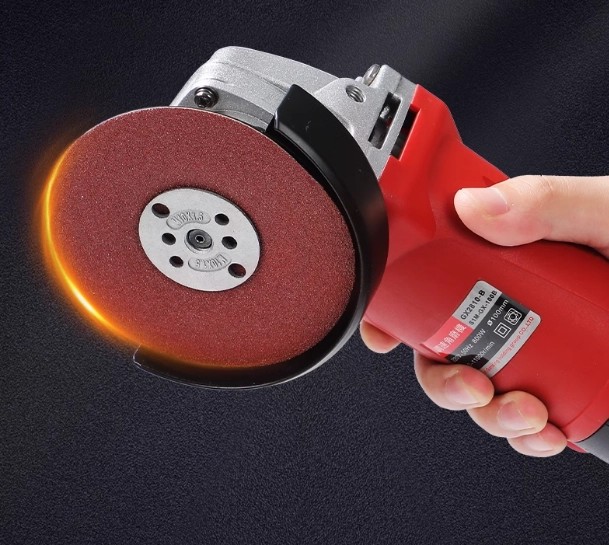
Understanding the Angle Grinder:An angle grinder is a multi-functional handheld power tool engineered for a variety of tasks, including cutting, grinding, buffing, and sanding. It typically incorporates a motor-driven abrasive disc or wheel that can be swapped out according to the specific requirements of the job. The designation “angle grinder” is commonly employed due to the tool’s unique configuration, which includes a right-angle gearbox.Key Features of Angle Grinders:Adjustable Shield:Angle grinders come with a movable shield that can be moved to protect the user from any sparks, debris, and the spinning disc when in use.Interchangeable Abrasive Wheels:A significant benefit of angle grinders is their adaptability. Users can effortlessly switch between various types of abrasive wheels, including cutting discs, grinding plates, wire brushes, and polishing pads.Variable Speed Control:A lot of contemporary angle grinders feature adjustable speed settings, enabling operaters to customize the tool’s output for specific tasks and materials.Understanding the Disc Grinder:Conversely, a disc grinder is a more specialized tool primarily intended for grinding tasks. It typically refers to larger, stationary machines utilized in industrial environments. These grinders usually have a larger grinding disc and mostly employed for heavy-duty grinding projects.Key Features of Disc Grinders:Fixed Grinding Surface:Unlike angle grinders, disc grinders typically feature a fixed grinding surface, meaning the disc size is not easily interchangeable. This characteristic makes them better suited for particular tasks.Stationary Construction:Disc grinders are generally larger and more robust than handheld angle grinders. They are commonly found in workshops and industrial environments where a stationary grinding solution is more efficient.Enhanced Power Capacity:Disc grinders are designed for heavy-duty operations and usually boast higher power capacities compared to handheld angle grinders. This makes them ideal for projects with harder base materials.Distinguishing Factors:Mobility:One of the key differences is mobility. Angle grinders, being portable and handheld, provide enhanced maneuverability, making them ideal for a diverse array of tasks across various locations. In contrast, disc grinders, which are stationary, are better suited for fixed workstations.Scope of Applications:Angle grinders are valued for their adaptability and can effortlessly perform cutting, grinding, and polishing tasks. On the other hand, disc grinders, with a more focused design for grinding, are predominantly used for heavy-duty grinding operations.While both angle grinders and disc grinders play vital roles in the realm of cutting and grinding, their distinctions are evident in design, mobility, and application scope. The selection between the two hinges on the specific demands of the task at hand. Angle grinders, with their portable versatility, are perfect for a variety of jobs, whereas disc grinders, with their robust and stationary design, excel in demanding grinding tasks within industrial environments. Recognizing these differences helps craftsmen and professionals choose the appropriate tool for the job, maximizing both efficiency and safety.




 +86 18503711019
 Call
Call